19 May 2026
The Influence of Clockwork Mechanics on Early Roulette Designs and Their Echoes in Current RNG Certification Processes
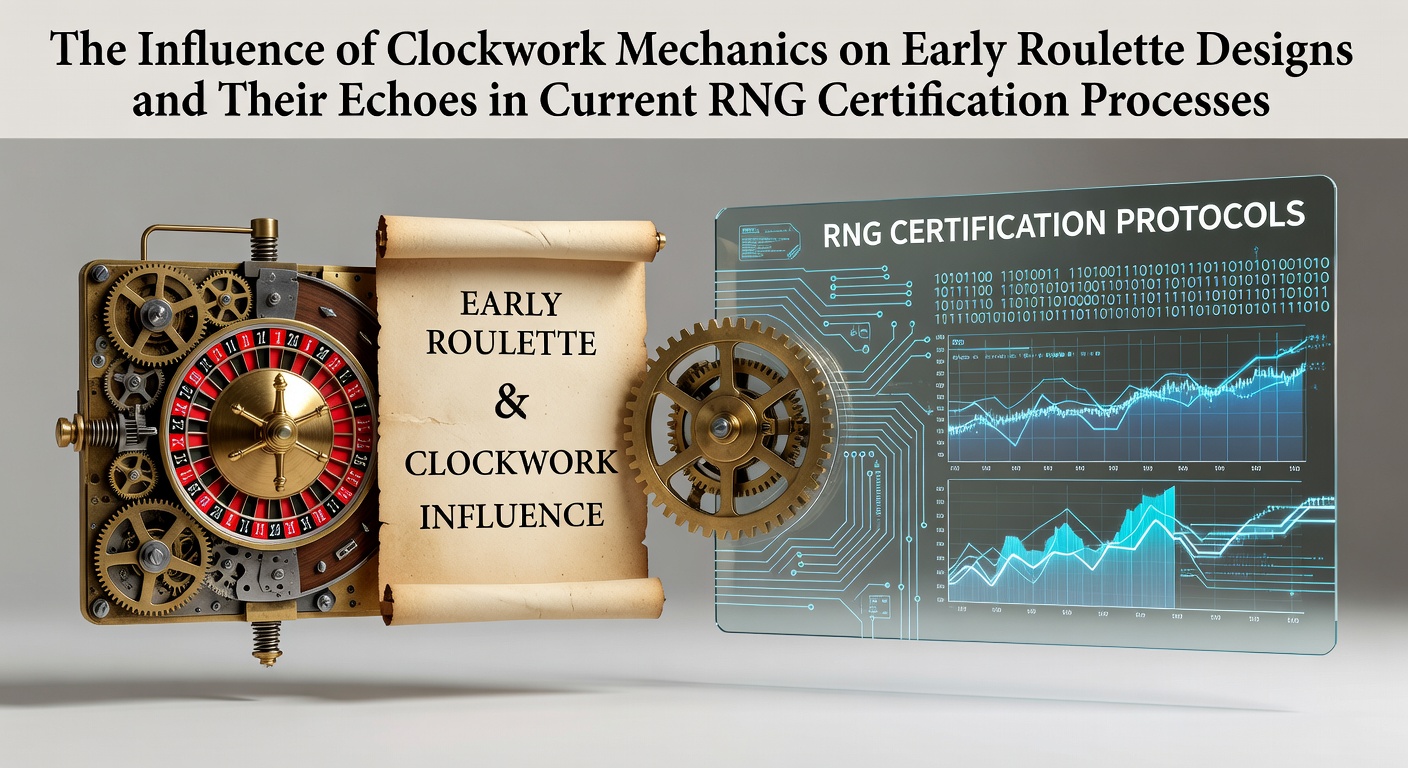
Early roulette wheels incorporated clockwork-inspired mechanisms that delivered consistent spin dynamics, and those same principles of verifiable precision continue to shape how regulators certify random number generators today. Blaise Pascal's 17th-century experiments with perpetual motion devices featured rotating disks mounted on finely balanced axles, and historians trace the conceptual lineage from those mechanisms directly to the compartmentalized wheels that appeared in Parisian gambling houses by the late 1700s. Engineers at the time used jeweled bearings and counterweighted frets to minimize friction variation, which created repeatable yet unpredictable ball trajectories across multiple revolutions.
Precision Engineering in the First Mechanical Wheels
Artisans constructed the initial wheels with brass gears and escapement-style timing elements borrowed from clockmaking workshops, and this borrowing ensured the rotor maintained steady angular velocity even after the croupier released the ball. Observers documented that any deviation in gear meshing produced measurable biases, which led manufacturers to adopt standardized calibration routines that required weekly inspection of bearing clearances and fret heights. Data from period engineering logs show that wheels passing these checks maintained outcome distributions within one percent of theoretical probabilities over thousands of spins, establishing an early benchmark for mechanical fairness that later regulatory frameworks would formalize.
By teh 19th century, wheel builders in Germany and Belgium had refined the clockwork approach further by integrating hidden locking pins that prevented rotor wobble during high-stakes sessions, and those innovations reduced exploitable physical tells that professional players had begun to catalog. Researchers examining surviving artifacts note that the transition from open clockwork frames to enclosed metal skirts coincided with the first documented use of independent observers who timed rotor revolutions with pocket chronometers, a practice that prefigured today's third-party testing protocols.
From Mechanical Verification to Algorithmic Assurance
Digital roulette platforms replaced physical rotors with pseudorandom algorithms seeded by hardware entropy sources, yet the requirement for demonstrable uniformity persists unchanged. Certification laboratories subject each RNG implementation to statistical suites that detect serial correlation and frequency bias, mirroring the mechanical inspections that once checked for uneven fret spacing. In May 2026, the Malta Gaming Authority updated its technical standards to mandate continuous entropy monitoring for all licensed operators, requiring real-time logging of seed generation events and immediate flagging of any sequence that deviates beyond established tolerance thresholds.
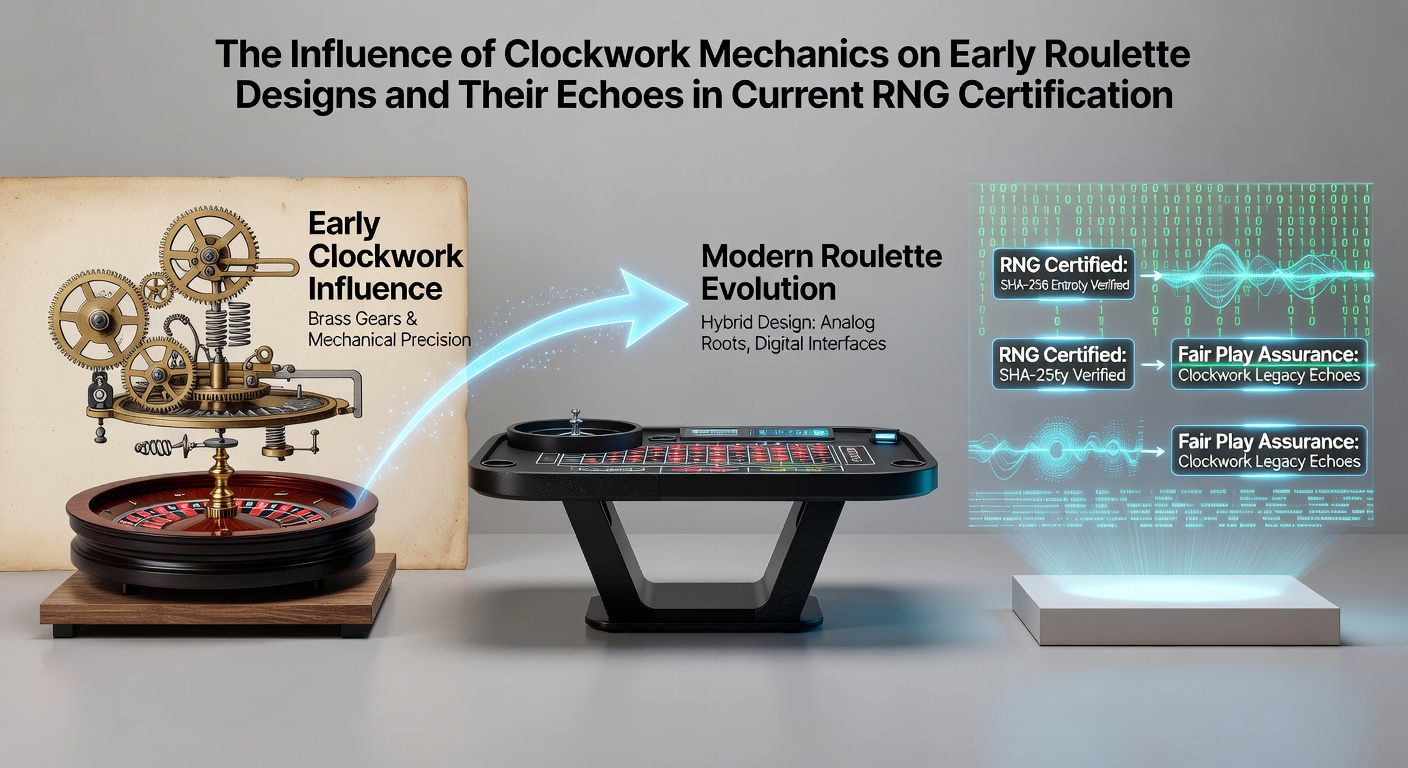
Testing regimens now include the same emphasis on reproducibility that clockmakers demanded when verifying gear ratios. Engineers run parallel simulations on isolated hardware modules to confirm that identical seeds produce identical outcome sequences, and regulators require source code escrow so that auditors can reconstruct any disputed spin history. This procedural continuity appears in the way certification bodies reference historical mechanical standards when drafting new guidelines, acknowledging that the core objective remains the elimination of predictable advantage for either player or operator.
Regulatory Frameworks and Ongoing Audits
Government agencies across multiple jurisdictions maintain laboratories that perform both initial and ongoing evaluations, and these evaluations incorporate elements originally developed to validate physical wheel integrity. The New Jersey Division of Gaming Enforcement publishes quarterly summaries that detail RNG performance metrics across thousands of simulated cycles, while academic institutions in Australia have contributed peer-reviewed studies on entropy extraction methods that inform current certification checklists. Figures released by these bodies indicate that fewer than two percent of submitted RNG modules require redesign after initial review, reflecting the maturity of testing methodologies that trace their conceptual roots to 18th-century mechanical calibration.
Operators must now document every change to the random generation pipeline, including firmware updates and seed source replacements, and auditors conduct surprise inspections that parallel the unannounced wheel examinations once performed by casino inspectors in Monte Carlo. Such documentation requirements ensure that any deviation from certified behavior can be traced to a specific modification, preserving the chain of custody that mechanical wheel records once provided through stamped inspection plates.
Conclusion
The lineage from clockwork roulette mechanisms to contemporary RNG certification reveals a consistent regulatory priority: outcomes must remain free from systematic influence regardless of whether they originate in brass gears or silicon chips. Standards continue to evolve in response to technological capability, yet the foundational demand for measurable impartiality remains constant across centuries of development.