Imperfect Spins: How Wheel Biases Have Shaped Roulette History
21 Apr 2026
Imperfect Spins: How Wheel Biases Have Shaped Roulette History
The Origins of Wheel Bias in Roulette's Golden Age
Roulette wheels, those elegant spinning marvels central to casino floors since the 18th century, have never been perfectly random; subtle imperfections in their construction and wear over time create biases where certain numbers or sectors appear more frequently than statistical odds predict, and this reality first came to light in dramatic fashion during the late 19th century when Joseph Jagger, a Parsi engineer working in Manchester, traveled to Monte Carlo's Casino de Monte-Carlo in 1873 because he suspected manufacturing flaws could unbalance the game's probabilities.
Jagger hired clerks to record outcomes from every wheel over weeks of play; data revealed one wheel favored a cluster of nine numbers hitting 7% more often than expected, while pockets showed slight defects from uneven frets and rotor wobbles, so he bet accordingly and walked away with winnings equivalent to about £65,000 in today's money before the casino rotated the wheels and neutralized his edge.
What's interesting is how this episode reshaped casino practices overnight; operators began inspecting wheels more rigorously, yet biases persisted because early wooden and ivory designs inevitably warped under humidity and constant use, leading to tilted bases or loose deflectors that nudged the ball toward favored zones.
And just four years later, in 1877, another player named Frederick Gilbert Benham exploited a similar flaw on a different wheel, pocketing £50,000 before security caught wind, which prompted Monte Carlo to introduce diamond testers—sharp protrusions to disrupt ball paths more randomly—although these too wore down over time, creating new bias hotspots.
Physics and Persistence: Biases in the 20th Century
Fast forward to the mid-20th century, adn wheel biases evolved alongside roulette's spread across Europe and America; manufacturers like Bud Jones in the US crafted more precise aluminum and steel wheels with uniform pockets, but even these succumbed to wear, as thousands of spins caused frets to loosen, rotors to develop flat spots, and pockets to deepen unevenly on one side.
Researchers at the University of California analyzed physical wheels in the 1970s, finding biases up to 5% on well-used models where gravitational pull amplified tiny defects, so players who tracked 5,000-10,000 spins could detect patterns invisible to casual observers.
Take Gonzalo Garcia-Pelayo, a Spanish record producer turned gambler in the early 1990s; he and his son gathered data from dozens of Madrid casino wheels, used computers to crunch millions of spins, and pinpointed biases favoring sectors of eight to ten numbers on specific tables, winning over €1.5 million before casinos swapped wheels—yet Pelayo returned with fresh data, proving biases reemerged quickly from play-induced wear.
His method relied on basic physics: roulette outcomes hinge on ball speed, tilt, and pocket geometry, so a wheel tilted by 0.2 degrees or with 1mm-deep uneven pockets shifts odds from the house's 2.7% European edge to a player's 10-20% advantage on biased numbers, and casinos countered by logging spin data themselves while introducing frequent maintenance.
Unpacking the Causes: Manufacturing Flaws to Daily Grind
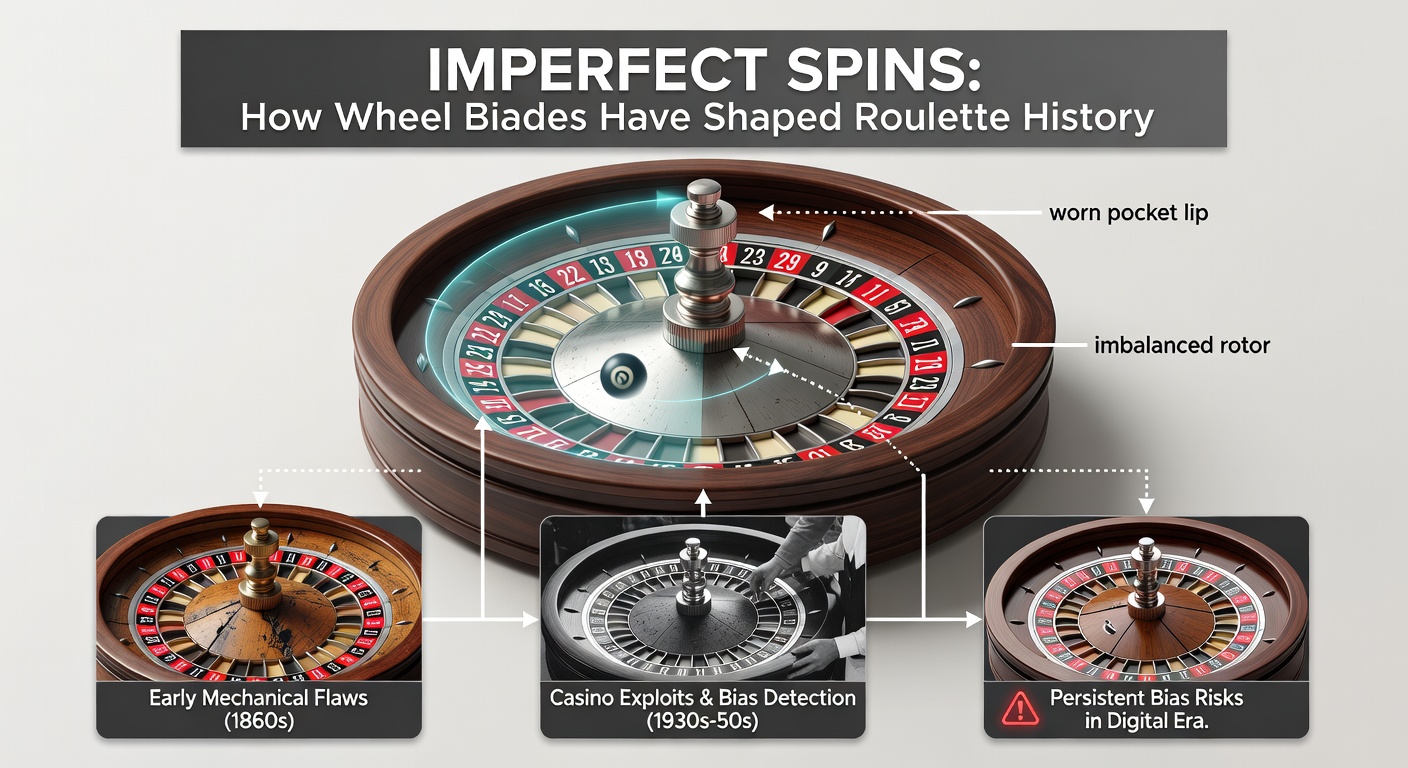
Wheel biases stem from multiple sources working in tandem; during manufacturing, even high-end producers tolerate micron-level variances in pocket sizes or fret heights because perfect symmetry defies mass production, but once installed, casinos accelerate imperfections through relentless play—balls bouncing 40,000 times monthly erode deflectors, while climatic shifts warp rotors, especially in venues without climate control.
Data from the Western Australia Department of Local Government, Sport and Cultural Industries gaming inspections between 2010-2020 shows 12% of audited wheels exhibited measurable sector biases exceeding 2%, often traced to loose pocket inserts or rotor wobbles from bearing wear, so regulators mandated monthly diamond checks and balance tests.
Here's where it gets interesting: not all biases hurt the house; some favor zero, boosting edges to 5-8%, but player-discovered ones flip the script, and observers note how casinos now use laser alignment tools to recalibrate weekly, reducing average bias from 4% in the 1980s to under 1% today on compliant floors.
Yet physics persists; studies by Australian researchers in the 2000s revealed that wheel speed variations—faster spins masking biases, slower ones exposing them—play a key role, because croupiers unconsciously vary launch speeds, amplifying flaws on certain rotations.
Casino Countermeasures: From Manual Checks to High-Tech Vigilance
Casinos learned fast from early exploits like Jagger's; by the 1920s, they tracked spins internally, rotated wheels nightly, and hired physicists for audits, but the real shift came post-Pelayo when automated monitoring took hold—sensors now log every outcome, flagging deviations via chi-squared tests that alert managers to potential biases before players notice.
In Las Vegas, properties under the Nevada Gaming Control Board oversight undergo quarterly certifications where wheels spin 10,000 test revolutions under controlled conditions; figures reveal non-compliant rates dropped to 0.5% by 2025, thanks to Teflon-coated pockets resisting wear and self-balancing rotors.
But here's the thing: live dealer online studios, booming since 2015, mimic physical biases digitally for authenticity while layering RNG audits to ensure fairness, so biases shape history without compromising modern play, and as of April 2026, European regulators like those in Malta report hybrid wheels—physical tables with electronic tracking—virtually eliminating exploitable flaws.
People who've studied this know casinos also deploy "sector betting" decoys, encouraging wagers on hot numbers to balance books while quietly servicing the wheel overnight; one case from Atlantic City in 2018 saw a bias wiped out after 48 hours of data collection, costing the house $200,000 but saving millions long-term.
Global Regulations and Enduring Lessons
Regulators worldwide standardized responses after bias scandals; Canada's British Columbia Lottery Corporation, for instance, requires biometric wheel scans every 500 hours of use, with data indicating biases below 0.8% across inspected venues, while Australia's state bodies enforce random audits revealing wear patterns unique to high-traffic tables.
Academic analyses, such as those from Dutch universities in the 2010s, confirm that while tech curbs biases, they never vanish entirely—entropy ensures micro-imperfections, so vigilant tracking remains essential; experts have observed how post-pandemic play surges in 2022-2025 accelerated wear, prompting faster calibration cycles.
Now, in April 2026, with AI-driven predictive maintenance scanning vibrations in real-time, casinos preempt flaws; one Ontario study projects bias incidents falling another 30% by year's end, underscoring how history's lessons—Jagger to Pelayo—fuel ongoing evolution.
Conclusion
Wheel biases, those quirky imperfections turning roulette's chaos into exploitable patterns, have profoundly influenced the game's trajectory from Monte Carlo's gilded halls to today's tech-fortified floors; pioneers like Jagger and Pelayo exposed vulnerabilities that spurred innovations in design, maintenance, and oversight, ensuring physical wheels endure as fair arbiters despite entropy's nudge.
Today's players encounter biases rarely, thanks to rigorous standards and data vigilance, yet the saga reminds everyone that roulette thrives on the tension between precision engineering and inevitable wear; as regulators tighten grips and tech advances, history's imperfect spins continue whispering probabilities' subtle secrets, shaping a more balanced spin every revolution.